Introduction
In the first two parts of this series we examined the mineral nepheline and the mineral assemblage of nepheline syenite. The key question for producers and users, however, is: how can the mineralogy of a deposit be measured precisely and linked to the quality of the final product? In this part we first review the geochemistry and phase relations of nepheline syenite, then explain the laboratory methods used to identify its minerals and the effect of each mineral on industrial performance.
1. The Geochemical Signature of Nepheline Syenite
Chemically, nepheline syenite is defined by four features:
- Silica undersaturation: SiO2 typically 50–60% and no free quartz.
- High alumina: about 20–25% Al2O3, higher than common feldspars.
- High alkalis: Na2O+K2O usually above 14% in commercial grades.
- Normative nepheline: in the CIPW norm, normative nepheline (ne) appears instead of quartz, a classic indicator of undersaturated rocks.
The world's two reference commercial grades — Canadian (Nephton, Ontario) and Norwegian (Stjernøy) nepheline syenite — show clearly how mineralogy drives chemistry: the Canadian product is more sodic and siliceous because of its abundant albite, while the Norwegian product carries more potassium because of its abundant K-feldspar.
%%FIG_EN:gen_a3|Chemical composition of commercial nepheline syenite grades|Figure 1 – Chemical composition of Canadian and Norwegian commercial nepheline syenite (wt%). Chart: Soorin Aras, based on Mineral Resources Tasmania report UR1996/13%%Key Geochemical Indicators
- Agpaitic index, molar (Na+K)/Al: below 1 for miaskitic (industrial) types and above 1 for agpaitic types.
- Na2O/K2O ratio: controls melting behavior and melt viscosity; sodic melts are generally more fluid and give higher thermal expansion.
- Fe2O3 and TiO2: the main coloring oxides, which determine product grade.
- Loss on ignition (LOI): an indicator of secondary hydrous or carbonate-bearing minerals such as cancrinite, zeolites and clays.
2. Phase Relations: The "Petrogeny's Residua System"
The petrologist Norman L. Bowen called the ternary system NaAlSiO4–KAlSiO4–SiO2 the "petrogeny's residua system", because the residual melts left by fractional crystallization of most magmas ultimately evolve toward compositions within it.
- The feldspar thermal barrier: the albite–orthoclase join acts as a thermal barrier. Melts on the silica-poor side of this join cannot evolve toward quartz.
- Two temperature minima: on the silica-rich side, melts reach the "granite minimum"; on the silica-poor side, the "nepheline syenite (phonolite) minimum". Nepheline syenites and their volcanic equivalents, phonolites, lie close to this minimum.
Industrial message: because nepheline syenite sits close to a temperature minimum, the rock is, simply put, "built by nature to melt at low temperature". This is the thermodynamic reason for its effectiveness as a flux in glass and ceramics.
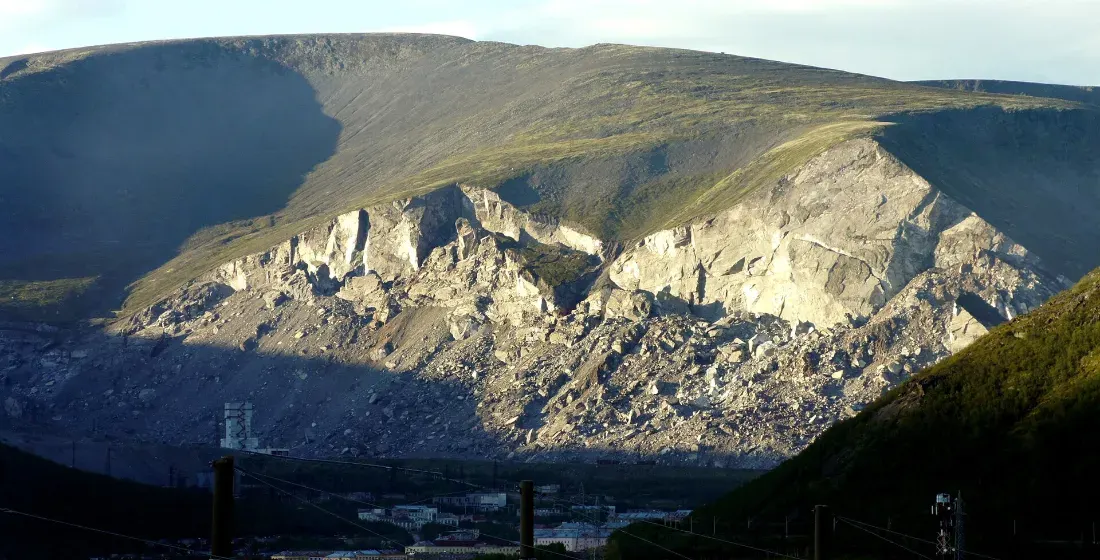
Figure 2 – Open-pit apatite–nepheline mining in the Khibiny alkaline complex, Kola Peninsula (Russia), one of the largest nepheline syenite massifs in the world. Photo: Ivtorov, CC BY-SA 4.0 (Wikimedia Commons)
3. Laboratory Methods for Mineral Identification
Accurate evaluation of a nepheline syenite deposit requires a combination of complementary methods; no single method is enough.
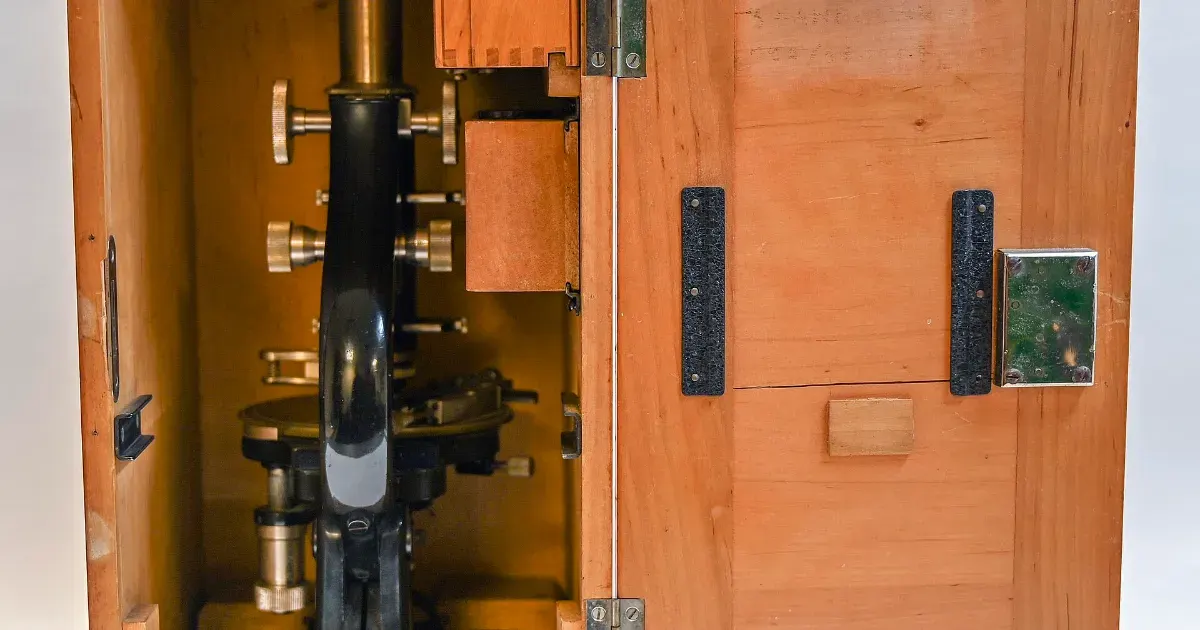
a) Petrography with the Polarizing Microscope
Studying thin and polished sections is the first step, revealing texture, grain size, mineral relationships and degree of alteration. Because nepheline, feldspar and quartz look alike under the microscope, selective staining (acid etching followed by staining) is often used to separate nepheline from feldspar and count its proportion.
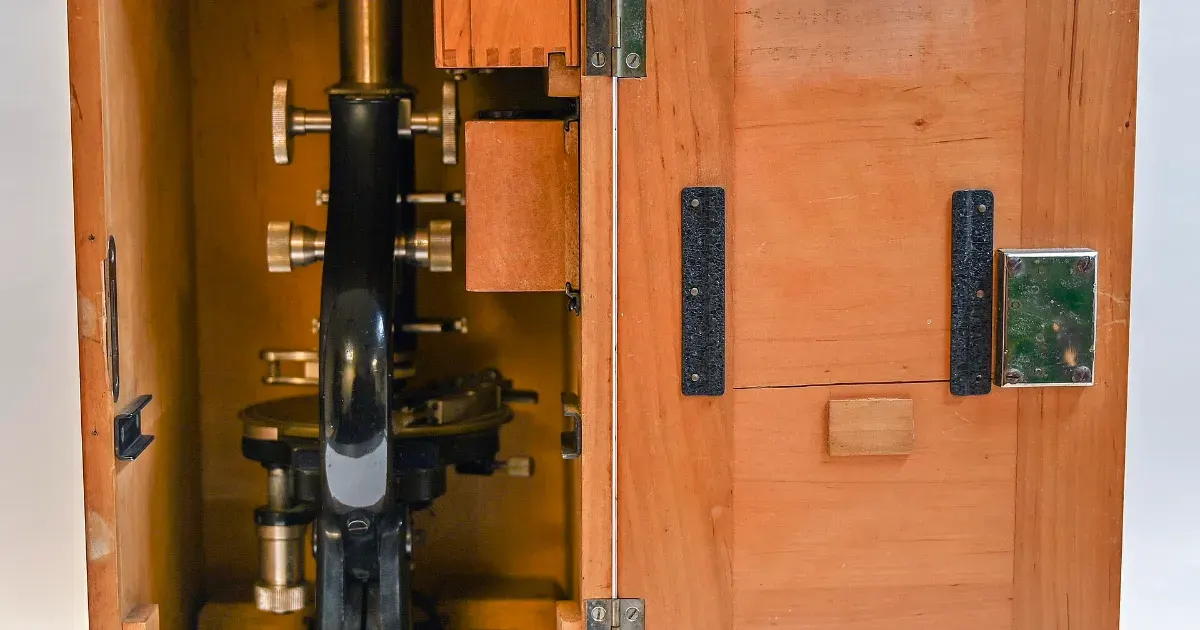
Figure 3 – A polarizing microscope, the basic tool for petrography and for identifying nepheline in thin section. Photo: Hannes Grobe, CC BY-SA 4.0 (Wikimedia Commons)
b) X-ray Diffraction (XRD)
XRD is the main method for identifying crystalline phases. Nepheline, microcline, albite, cancrinite, sodalite, zeolites and clay minerals each have a distinctive diffraction pattern. With the Rietveld method, the weight percentage of each phase can be estimated quantitatively — very valuable information for monitoring product consistency over time.
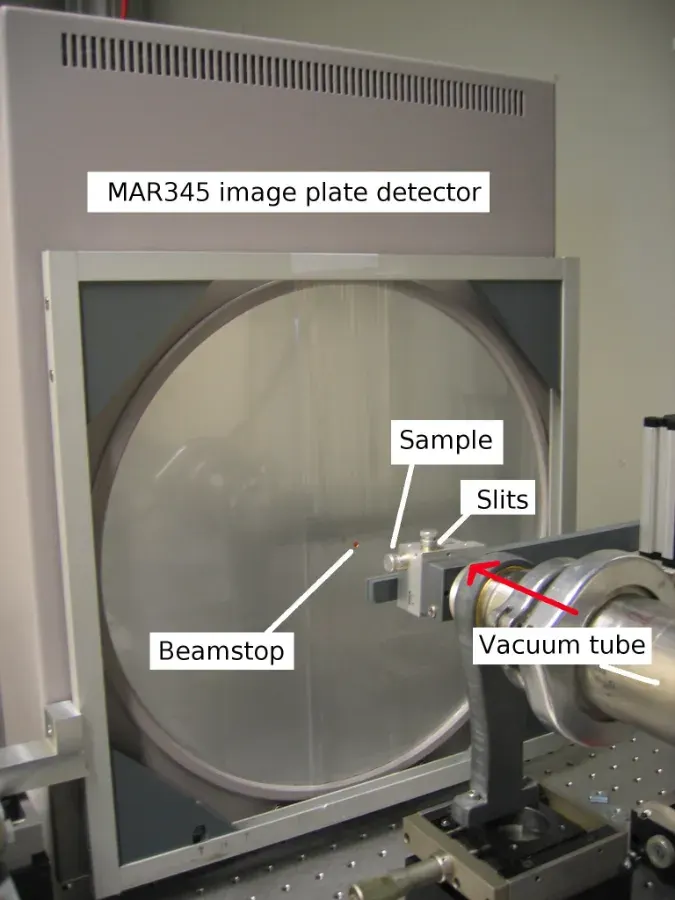
Figure 4 – Example of X-ray diffraction equipment in a laboratory. Photo: U. Vainio, University of Helsinki, public domain (Wikimedia Commons)
c) X-ray Fluorescence (XRF)
XRF measures the bulk chemical composition of a sample as major oxides (SiO2, Al2O3, Na2O, K2O, CaO, Fe2O3, TiO2, etc.) and, together with the LOI test, forms the basis of the product's technical data sheet (TDS). Combining XRD and XRF allows a normalized mineralogical composition to be calculated and the data to be cross-checked.
d) Scanning Electron Microscopy (SEM-EDS) and Electron Microprobe (EPMA)
These methods measure the chemistry of individual mineral grains — for example the Na/K ratio and excess silica of nepheline, or the amount of iron inside the feldspar and nepheline lattice. This shows how much of the total iron can be removed by magnetic separation and how much is "structural" and cannot be removed.
e) Automated Mineralogy (QEMSCAN and MLA)
SEM-based automated mineralogy systems analyze thousands of grains in a short time and report the degree of liberation of iron-bearing minerals in each size fraction — key data for choosing the optimum grind size before magnetic separation.
f) Processing and Thermal Tests
- Laboratory magnetic separation: measures iron removal at different magnetic field intensities.
- Thermal analysis (DTA/TGA): identifies hydrous and carbonate-bearing minerals and the sample's thermal behavior.
- Hot-stage microscopy: determines softening, sphere and melting temperatures, a direct measure of fluxing performance for ceramics.
4. Linking Mineralogy to Industrial Performance
Each mineral in nepheline syenite has a specific effect on the final product:
- Nepheline: supplies Na2O and Al2O3 and lowers the melting temperature; the main "value" component.
- K-feldspar and albite: supply alkalis and alumina; their ratio tunes melting behavior.
- Biotite, amphibole, aegirine and magnetite: the main iron sources; if not removed properly, they cause black specks in glazes and tiles and green or yellow tints in glass.
- Titanite, ilmenite and titanian garnet: sources of TiO2; together with iron, they give yellow to brown tints in glass.
- Cancrinite, zeolites and clays: raise LOI and can cause bubbles and pinholes in glazes.
- Sodalite: introduces minor chlorine into the melt.
Typical specifications call for total iron below 0.10% Fe2O3 for clear-glass nepheline syenite and about 0.07% for ceramic grades, while colored glass can accept up to about 0.35%.
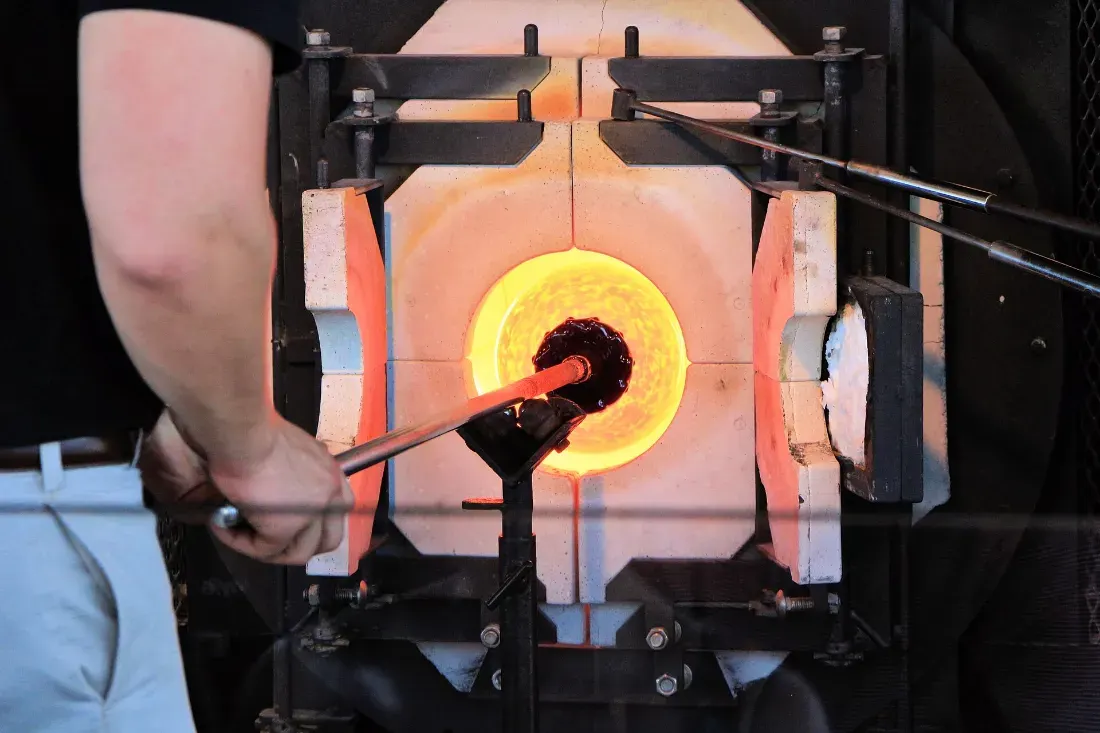
Figure 5 – Glass melting in a furnace; by supplying alumina and alkalis, nepheline syenite lowers melting temperature and energy use. Photo: Paul Harrison, CC BY-SA 4.0 (Wikimedia Commons)

Figure 6 – Glazed ceramic tiles; in tile bodies and glazes, residual iron-bearing minerals show up as dark specks. Photo: Houss 2020, CC0 (Wikimedia Commons)
5. A Note on Iranian Deposits
Published scientific studies of the Kaleybar nepheline syenite in East Azerbaijan report significant amphibole and titanian garnet (melanite). From a processing standpoint, this means:
- laboratory programs should focus on measuring the liberation of amphibole and garnet and the efficiency of high-intensity magnetic separation;
- monitoring TiO2 alongside Fe2O3 is particularly important for glass customers;
- zoning and blocking the deposit by mineralogy (not only bulk chemistry) helps keep product quality consistent.
Series Conclusion
Across this three-part series we have seen that:
- Part one: nepheline, a mineral with a stuffed-tridymite structure and an inherent Na:K ratio of about 3:1, is the core of the rock's industrial value.
- Part two: the mineral assemblage of each deposit, from feldspars to mafic and accessory minerals, creates a unique "signature" that determines chemistry and processability.
- Part three: geochemistry and phase relations explain why nepheline syenite is an outstanding flux, and XRD, XRF, SEM and automated mineralogy are the tools that turn this knowledge into precise quality control.
A deep understanding of mineralogy is the foundation for producing nepheline syenite of consistent, competitive quality for domestic and international markets — the path Soorin Aras Zendeh Roud follows in developing Iran's nepheline syenite resources.
Sources: Mineral Resources Tasmania, report UR1996/13; Bowen, N.L. (1937), Recent high-temperature research on silicates and its significance in igneous geology; Hajialioghli, Moazzen & Milke (2011), Central European Geology 54/3; Wikipedia (Nepheline syenite); Mindat. Images from Wikimedia Commons under the licenses stated.